
Healthspan vs. Lifespan
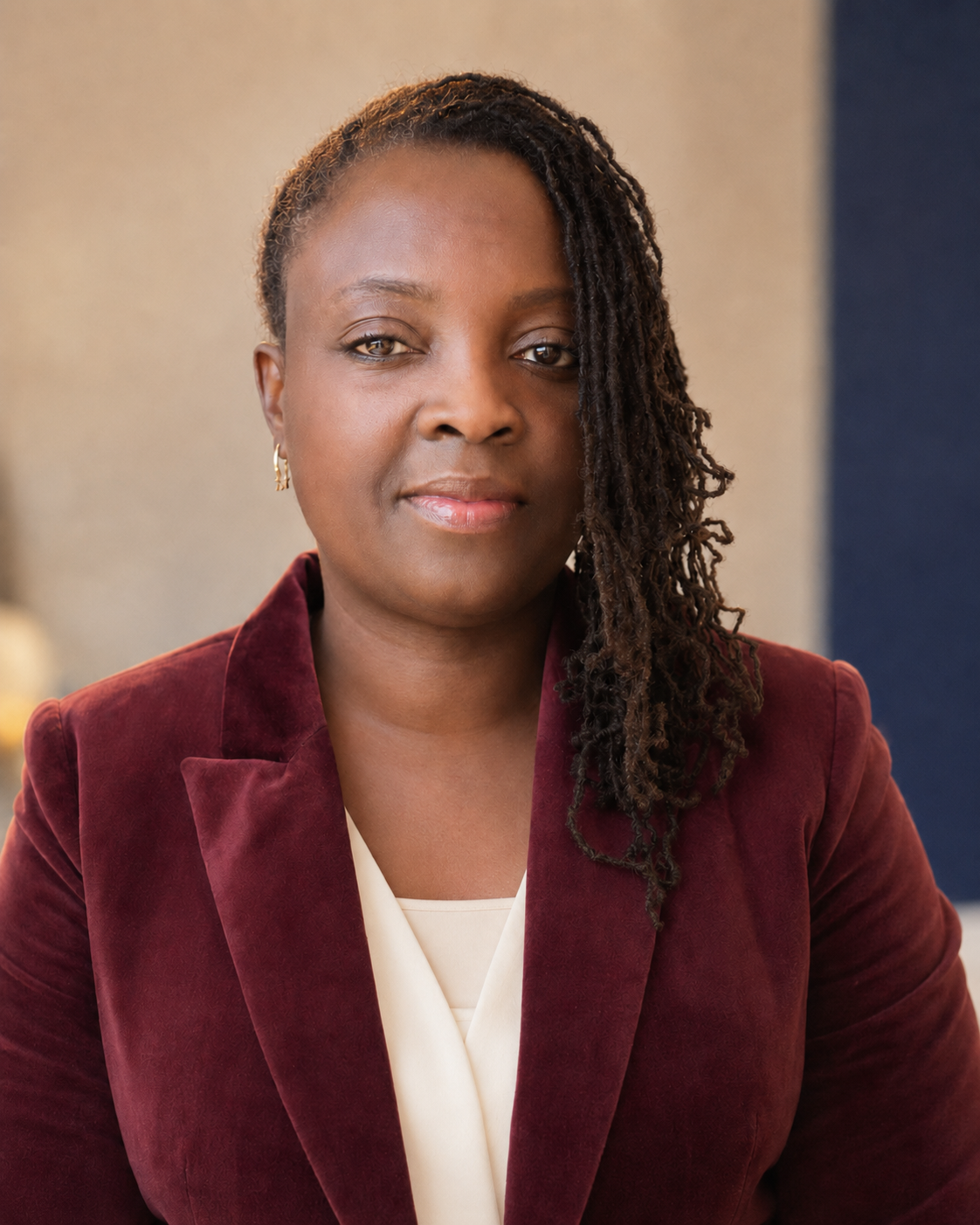
Dr. Oluwakemi Olowoyo, MD
I am rereading Stephen R. Covey's The 7 Habits of Highly Effective People right now. It is a book I recommend, and one of its best-known ideas has been sitting differently with me this time around:
Begin with the end in mind.
Covey describes this second habit as getting clear about where you want to go and who you want to become, then allowing that vision to guide the choices you make along the way.
It is good advice for life.
But lately, I have been thinking about what it means for our health.
Have you ever stopped to picture yourself at 70? At 80? At 90?
Not simply whether you are still alive.
What do you hope you are still able to do?
Maybe you want to travel. Get down on the floor and get yourself back up again. Carry your own groceries. Climb the stairs in your own home. Remember the conversation you had yesterday. Walk through an airport without wondering whether you will make it to the gate. Dance. Garden. Serve. Work, if you choose. Play with grandchildren—or perhaps great-grandchildren. Continue participating in the relationships, community, faith, work and purpose that make your life yours.
Because there is an uncomfortable truth underneath every conversation about longevity:
None of us is getting out of here alive.
Most of us hope for a long life. But perhaps the question isn't only: How long? It is also: How well?
How long? And how well?
Lifespan is not the whole story
Your lifespan is how long you live. Your healthspan is, broadly speaking, the portion of life in which you retain the health and functional capacity to continue doing the things that matter to you.
The World Health Organization frames healthy aging around functional ability: maintaining the capabilities that allow people to be and do what they value as they grow older.
That distinction matters. Because adding years to life is not quite the same as adding life to those years.
So before we talk about blood sugar, gut health, sleep, hormones, inflammation, mitochondria, or any of the other places this newsletter will eventually take us, I want us to begin somewhere simpler. With a picture.
What do you want your later years to look like?
Once we have some idea where we hope to go, we can begin asking whether the things we are doing today are helping move us in that direction.
Healthy aging is something we help create
Healthy aging is not simply something that happens to us. It is something we help create.
Notice that I said help create.
We do not choose every card we are dealt. We do not choose our genes. We cannot control every illness, injury, childhood experience, exposure, environment, or circumstance. Some of us unquestionably have more stacked against us than others. And none of us gets guarantees.
But there is an important difference between control and influence. We may not control the outcome. We can still influence the odds.
How we move matters. What we eat most of the time matters. Sleep matters. Smoking matters. Alcohol matters. Strength matters. Relationships matter. Stress and recovery matter. Preventive medical care matters. And paying attention when our bodies begin giving us information matters.
You do not have to control everything to make something better. That is a message I want you to hear repeatedly here:
There is usually something worth working on from where you are.
The diagnosis is not always where the story began
Many chronic conditions do not begin on the day someone finally gives them a name. We often experience disease as an event:
"My A1c is now in the diabetic range." "I have osteoporosis." "My blood pressure is high." "I had a heart attack." "I have lost so much strength."
But in many cases, the biological story was unfolding before the diagnostic threshold was crossed.
The event may be where we notice the story. It is not necessarily where the story started.
The event may be where we notice the story. It is not necessarily where the story started.
That does not make routine preventive care less important. Screening matters. Appropriate testing matters. Diagnosis matters. Treatment matters.
But being an active participant in your health also means learning to recognize trajectory.
Is my blood pressure gradually rising? Is my glucose changing over time? Am I getting weaker? Is my waist changing? Is my sleep deteriorating? Do I recover differently than I did five years ago? What runs in my family? What symptoms keep repeating?
Sometimes it also means asking whether looking deeper would actually change what we do. We will spend plenty of time on that later.
For now, I simply want to plant this seed:
"I do not have a diagnosis" and "there is nothing worth paying attention to" are not always the same thing.
We know what we know. And we don't know what we don't know.
Medicine will continue to evolve. Tests will improve. Technology will change. There are things science does not yet understand, and there may be things about our own bodies that we do not yet know enough to ask about.
But here's the encouraging part:
You do not need to know everything before you can do something.
Most of us already know something.
Maybe you know you are not sleeping enough. Maybe you have been meaning to move your body consistently for years. Maybe the blood-pressure readings have been creeping upward and you keep telling yourself you will deal with them later. Maybe alcohol has become more frequent than you intended. Maybe you have been postponing a screening test or appointment you know you need. Maybe you spend your days taking care of everybody else and your own health continually falls to the bottom of the list.
Maybe you already know exactly what your thing is.
Start there.
Begin again—from here
Wherever you are right now, let this be a starting point rather than a verdict.
Take a piece of paper and write this down:
What do I want my health to allow me to do 10, 20, or 30 years from now?
Then ask yourself: What am I doing now that I already know is moving me away from that future? And: What am I not doing now that I already know would move me toward it?
Do not use your answers to beat yourself up. This is not an inventory of your failures. It is an inventory of your opportunities.
This is not an inventory of your failures. It is an inventory of your opportunities.
Then ask one more question: Of the things I just named, what is ONE thing I am willing to begin changing?
Not fifteen things. One.
You do not have to overhaul your life this week. You simply need to start moving in the direction you say you want to go.
And I want you to know something else: I am cheering for you. Not for some imaginary version of you with perfect discipline, unlimited time, no responsibilities and ideal circumstances. For you, starting where you are. That is the person who gets to take the next step.
Your body is more responsive than you may realize
There is another reason I want you to feel hopeful.
The human body is remarkably responsive.
Not everything can be prevented. Not everything can be reversed. There are illnesses, injuries and biological changes that we cannot simply lifestyle our way out of, and I will never tell you otherwise.
But that truth should not hide another one:
Far more is modifiable than many people realize.
Blood pressure can improve. Insulin sensitivity can improve. Strength can be rebuilt. Fitness can increase. Sleep can improve. Metabolic health can change.
Physical function can improve, including later in life. The National Institute on Aging notes that physical activity can improve health and function in older adults and emphasizes that it is not too late to begin benefiting from movement; strength training can also help preserve muscle and mobility with age.
That does not mean every disease disappears. It means something more useful:
Your current trajectory does not automatically have to remain your future trajectory.
Sometimes physiology that has been drifting in one direction for years can begin responding far sooner than it took that pattern to develop once meaningful inputs change.
You may not be able to rewrite every page that came before. But you are still writing the next one.
You may not be able to rewrite every page that came before. But you are still writing the next one.
What are we handing forward?
This newsletter is arriving at a fitting time.
August 12 is International Youth Day, an annual United Nations observance focused on young people and the challenges and opportunities affecting their lives.
It has made me think about healthspan in another way.
What are we handing forward?
Not only to our own sons and daughters, if we have them, but to the younger people watching us and eventually inheriting the culture we help create.
Health is taught in more ways than we realize. Young people notice what food looks like in everyday life. Whether movement is normal. Whether sleep is protected or sacrificed. Whether stress is something we recognize and recover from—or simply endure indefinitely. Whether seeing a doctor means only waiting until something is terribly wrong. Whether caring for the body is treated as vanity, punishment, inconvenience—or stewardship.
They hear what we say. But they also watch what we normalize.
None of us will hand the next generation perfect genes, perfect environments, or perfect lives. But perhaps we can hand them something extraordinarily useful: a better understanding of how to care for the bodies they have been given.
And perhaps part of improving our own health is learning enough that, when the time comes, we can hand the baton forward a little better than it was handed to us.
That, too, is beginning with the end in mind.
Why Rooted to Thrive exists
I have been doing a great deal of thinking about this newsletter too—also beginning with the end in mind.
There is no shortage of health information. Quite the opposite.
One day a food will supposedly save us. The next day the same food is supposedly killing us. There is always another supplement. Another test. Another headline. Another influencer. Another "one thing" we apparently should have been doing all along.
But information is not the same thing as understanding.
I do not think most people need another endless stream of disconnected health tips. I want Rooted to Thrive to do something different.
I want to help you understand enough about how the body works that health information begins to make more sense.
Why does sleep affect blood sugar? Why does muscle matter so much as we age? What is the liver actually doing? Why might two people respond differently to the same input? What can symptoms and measurements tell us—and what can they not tell us? When should we look deeper? When do we simply need to act on what we already know? And how do we distinguish something useful from something that merely sounds scientific?
Built to still matter years from now
I am deliberately building Rooted to Thrive to be evergreen.
I do not want the value of an issue to disappear because the latest health trend changes next month.
Science will evolve. And when good evidence changes what we know, we should change with it.
But underneath changing technologies, tests, products, and headlines are enduring fundamentals: sleep. food. movement. light. strength. metabolic health. stress and recovery. relationships. environment. purpose.
And, importantly, the way all of these interact. Those are the roots.
So my goal is not merely to tell you what to do. It is to help you understand why.
I do not want you dependent on this newsletter for the next health tip. I want you increasingly equipped to think about your own health.
48 months. One foundation.
Over the next 48 months—four years—I am building Rooted to Thrive as a health curriculum, one useful idea at a time.
Each issue will stand on its own. If you miss one, you should still be able to pick up another and learn something useful.
But the ideas will also layer on one another, gradually building a practical foundation for understanding: how your body works, how health changes over time, why many chronic problems develop, what symptoms and measurements can—and cannot—tell us, and where we have meaningful opportunities to influence our trajectory.
My hope is that, over time, you begin: asking better questions, recognizing patterns earlier, feeling less intimidated by your health information, making more informed choices, walking into medical visits better prepared, knowing when something deserves more attention, and becoming increasingly capable of being an active participant and strong advocate for your own health—while knowing when you need help from others.
Dr. O's Take
I want you to come away from these pages understanding more. But I also want you to feel encouraged. I want there to be a voice in your corner saying: Keep going. Learn the next thing. Make the next choice. If you fall off, begin again. Your starting point is not your finish line.
Something else is taking root
Rooted to Thrive is also one part of something larger I have been quietly building: Perisson Optimized Health.
Perisson speaks to abundance—not merely being alive, but having as much health, function, vitality and capacity as possible to live the life we have been given.
Its mission is to help people better understand their health, improve the factors they can influence, and add healthspan to lifespan so they can live abundantly and fulfill what matters to them.
I am building it thoughtfully, and I will share more as it unfolds. For now, Rooted to Thrive is one of the places where that mission begins.
Rooted to Thrive will remain fully free through the end of this year. Beginning in January, the full monthly curriculum becomes part of a modest annual subscription that helps support the research, writing, and ongoing work behind it. There will always be a free way to stay connected and receive useful health education each month — I want this to stay accessible while also building something sustainable for the long run. If you join as a founding subscriber before the paid tier launches, that founding price is yours to keep for as long as you stay subscribed, even as it may rise for those who join later. I would rather be transparent with you about all of this from the beginning than surprise you later.
And while I'm being transparent — last month's very first send hit a few technical hiccups on my end, and some of you didn't get Issue #1 in your inbox right away. Thank you for your patience while I found my footing. Things should run smoothly from here.
I hope this eventually becomes more than something you read. I hope we build a community of people who want to understand more, act on what they learn, encourage one another, and take thoughtful ownership of the parts of their health they can influence.
Before you go…
Do not try to fix everything today. Go back to that piece of paper.
What do you want your health to allow you to do later?
And then: What is ONE thing you can begin doing today that gives that future version of you a better chance?
Start there.
🎯 Your one action for this month
Write down what you want your health to allow you to do 10, 20, or 30 years from now. Then choose ONE thing you can begin doing now to give that future version of you a better chance.
I do not know exactly what cards you have been dealt. I do not know everything your body has already been through. And I cannot promise you a particular outcome.
But I can tell you this: You are not merely a spectator in this story.
There are things you can learn. There are questions you can ask. There are choices you can make. There are things worth changing. And there is still something worth building toward.
So wherever you are beginning from today: I am cheering you on.
Healthy aging is not simply something that happens to us. It is something we help create.
Begin with the end in mind.
You'll hear from me like this every second Tuesday of the month.
Next month: the "Less Medicine" half of Less Medicine, More Life — and why taking responsibility for your health isn't about blame. It's about power.
To your health,
Oluwakemi Olowoyo, MD
Perisson Optimized Health
Live abundantly, optimize your health.
This newsletter is educational in nature and is not a substitute for personalized medical care from your own physician. Always talk with your doctor before making changes to any medication or treatment plan.

Responses